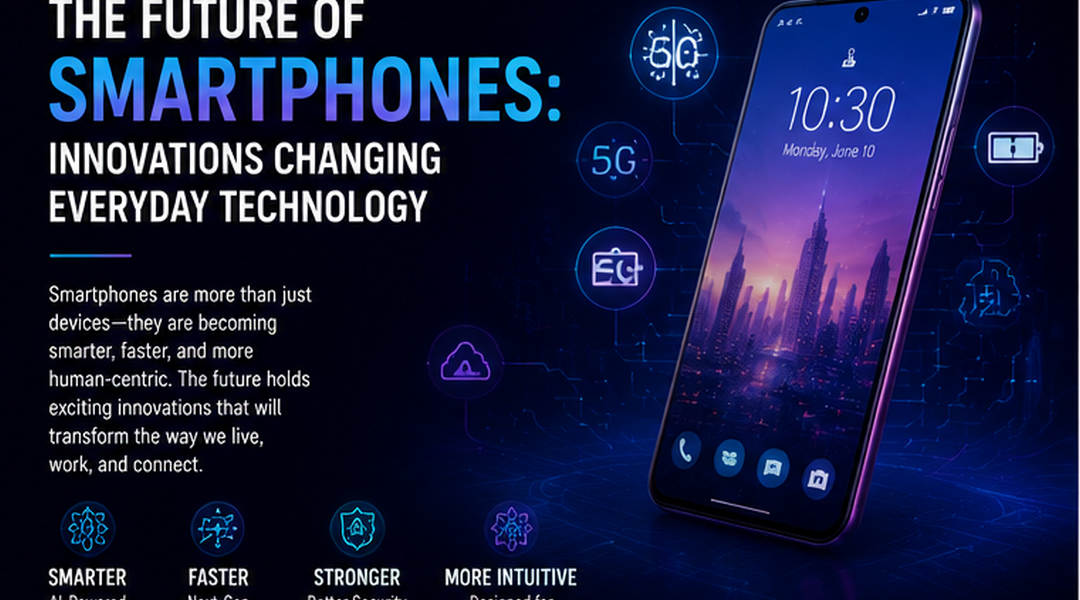
The Future of Smartphones: Innovations Changing Everyday Technology

Smartphones have become one of the most important technologies in modern life. What started as a simple communication device has transformed into a powerful digital companion capable of managing work, entertainment, finances, health, education, photography, and everyday tasks.
Over the past two decades, smartphones have evolved from basic calling devices into advanced computers that fit inside our pockets. Today, users expect faster performance, better cameras, stronger security, longer battery life, and intelligent features that make daily activities easier.
However, smartphone innovation is far from complete. Emerging technologies such as artificial intelligence, flexible displays, advanced connectivity, improved battery systems, augmented reality, and smarter personal assistants are shaping the next generation of mobile devices.
The future of smartphones will not only be about faster processors or better cameras. It will be about creating more intelligent, personalized, connected, and efficient experiences that transform how people interact with technology every day.
The Evolution of Smartphones
The journey of smartphones reflects the rapid progress of digital technology.
Early mobile phones were mainly designed for voice communication. Later, manufacturers introduced features such as text messaging, cameras, internet browsing, and application support.
The introduction of modern smartphone platforms changed the industry completely. Smartphones became capable of running thousands of applications, accessing online services, and connecting users to global digital ecosystems.
Today, smartphones combine multiple technologies, including:
- High-performance processors
- Artificial intelligence systems
- Advanced camera sensors
- Biometric security
- Wireless connectivity
- Cloud integration
- Health monitoring features
- Mobile payment systems
This continuous development has turned smartphones into essential tools for modern society.
Artificial Intelligence Will Shape the Next Generation of Smartphones
Artificial intelligence (AI) is expected to become one of the biggest influences on future smartphones.
Modern smartphones already use AI for features such as:
- Camera improvements
- Voice recognition
- Face detection
- Battery optimization
- Personalized recommendations
- Spam detection
Future smartphones will likely use AI more deeply.
Instead of simply responding to commands, smartphones may become more proactive digital assistants. They could understand user habits, predict needs, automate routine tasks, and provide personalized suggestions.
For example, an AI-powered smartphone may recognize daily patterns and automatically adjust settings based on location, schedule, or user behavior.
AI could also improve communication by providing real-time translation, smarter voice assistants, and more natural interactions.
The future smartphone may become less like a device users operate manually and more like an intelligent assistant that helps manage everyday life.
Advanced Smartphone Cameras and Computational Photography
Camera technology has become one of the most important factors influencing smartphone purchases.
Modern smartphones can capture professional-quality images using advanced sensors, artificial intelligence, image processing, and computational photography techniques.
Future smartphone cameras are expected to become even more powerful.
Innovations may include:
- Improved low-light photography
- Better zoom capabilities
- More realistic image processing
- Advanced video recording
- AI-powered editing tools
- Enhanced 3D imaging
Computational photography allows smartphones to combine hardware and software to produce better results.
Instead of relying only on physical camera components, future devices will use AI algorithms to improve clarity, color accuracy, lighting, and detail.
This means users may be able to capture professional-looking photos and videos without needing expensive camera equipment.
Foldable and Flexible Smartphone Displays
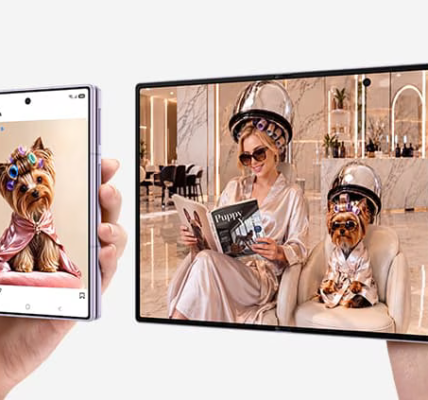
One of the most visible changes in smartphone design is the development of foldable devices.
Traditional smartphones have fixed rectangular screens, but foldable technology introduces new possibilities.
Foldable smartphones can provide larger displays while maintaining portability.
Future flexible displays may become thinner, stronger, and more affordable.
Possible developments include:
- Rollable screens
- Expandable displays
- More durable folding mechanisms
- Seamless flexible screens
These innovations could change how users interact with mobile devices.
A smartphone could potentially transform into a tablet-sized workspace when needed and return to a compact device for portability.
As display technology improves, manufacturers may explore entirely new smartphone designs.
Faster Connectivity Through Advanced Networks
Connectivity is a major part of smartphone evolution.
The introduction of faster mobile networks has improved streaming, gaming, video calls, cloud services, and online applications.
Future smartphones will benefit from continued advancements in wireless technology.
Improved connectivity can support:
- Faster downloads
- More reliable communication
- Better cloud experiences
- Connected smart devices
- Real-time applications
As networks become more advanced, smartphones will increasingly act as control centers for connected environments.
Users may interact with smart homes, vehicles, healthcare devices, and other technologies through their phones.
The Growth of Smartphone-Based Artificial Intelligence
Future smartphones may include more powerful AI processing directly on the device.
Currently, many AI tasks depend on cloud servers. However, improvements in mobile processors are allowing more AI functions to run locally.
This approach offers several advantages:
- Faster responses
- Improved privacy
- Reduced dependence on internet connections
- Lower cloud processing requirements
On-device AI could enable smarter features while keeping more personal information processed directly on the smartphone.
For example, voice recognition, photo organization, language translation, and personal recommendations could become faster and more private.
Battery Technology Will Become a Major Focus
Battery life remains one of the biggest challenges in smartphone technology.
Although processors and software have become more efficient, users still want devices that last longer between charges.
Future smartphone innovation will likely focus heavily on battery improvements.
Possible developments include:
- Faster charging technology
- More efficient batteries
- New battery materials
- Better energy management systems
Artificial intelligence may also improve battery performance by learning user behavior and optimizing power consumption.
For example, a smartphone may automatically reduce energy usage for applications that are rarely used.
Longer battery life would significantly improve the overall smartphone experience.
Improved Security and Privacy Features
As smartphones store more personal information, security has become increasingly important.
Modern smartphones already include features such as fingerprint sensors, facial recognition, encryption, and secure authentication systems.
Future devices are expected to introduce even stronger security technologies.
Potential innovations include:
- Advanced biometric authentication
- AI-powered threat detection
- Stronger encryption methods
- Privacy-focused processing
- Secure digital identity systems
Privacy will also become a major consideration.
Users are becoming more aware of how their data is collected and used. Future smartphones will need to provide better transparency and stronger control over personal information.
Augmented Reality and Mixed Reality Experiences
Augmented reality (AR) is another technology expected to influence the future of smartphones.
AR combines digital information with the real world by placing virtual elements into a user’s environment.
Current smartphones already support basic AR applications, but future improvements could create more advanced experiences.
Possible uses include:
- Virtual shopping experiences
- Navigation assistance
- Educational tools
- Gaming experiences
- Interior design visualization
- Real-time information displays
Smartphones may become important platforms for mixed reality experiences before dedicated AR devices become widely adopted.
Smarter Health and Wellness Features
Smartphones are increasingly becoming health-focused devices.
Many modern phones and connected applications can track:
- Physical activity
- Sleep patterns
- Heart-related information
- Fitness goals
- Wellness habits
Future smartphones may include more advanced health monitoring capabilities.
Artificial intelligence could analyze health-related information and provide personalized insights.
Integration with wearable devices may also expand, allowing smartphones to act as central platforms for managing personal wellness information.
However, health technologies require careful attention to accuracy, privacy, and responsible use.
Cloud Integration Will Continue Growing
Cloud technology has already changed how people use smartphones.
Users can store photographs, documents, applications, and data online and access them across multiple devices.
Future smartphones will likely become even more connected to cloud platforms.
Cloud integration can support:
- Seamless device synchronization
- Online storage
- Remote processing
- AI-powered services
- Cross-device experiences
Instead of depending entirely on local hardware, smartphones may increasingly work together with cloud systems to provide powerful digital experiences.
Sustainable Smartphone Development
Environmental concerns are becoming increasingly important in technology.
Consumers and manufacturers are paying more attention to sustainability, including device lifespan, repairability, recycling, and responsible material use.
Future smartphones may focus on:
- More durable designs
- Longer software support
- Recyclable materials
- Energy-efficient components
- Easier repairs
A sustainable approach can reduce electronic waste and encourage more responsible technology development.
The future of smartphones will not only be measured by performance but also by environmental responsibility.
Smartphones and the Internet of Things
The Internet of Things (IoT) connects everyday objects to digital networks.
Smartphones already serve as control centers for many connected devices, including smart home systems, wearable technology, and connected appliances.
In the future, this relationship is expected to become stronger.
A smartphone could manage:
- Home security systems
- Smart lighting
- Connected vehicles
- Healthcare devices
- Workplace technologies
As more devices become connected, smartphones will likely become central platforms for managing digital environments.
The Rise of Smartphone Customization
Future smartphones may become more personalized.
Instead of offering identical experiences to every user, devices may adapt based on individual preferences, habits, and needs.
AI could customize:
- User interfaces
- Notifications
- Application recommendations
- Battery management
- Security settings
Personalization could make smartphones feel more intuitive and efficient.
The goal will be to create technology that understands users rather than requiring users to constantly adjust to technology.
Challenges Facing Future Smartphones
Although smartphone technology continues to advance, several challenges remain.
One major challenge is balancing innovation with affordability.
Advanced features such as AI processing, foldable displays, and improved cameras can increase manufacturing costs.
Privacy is another important issue.
As smartphones collect more information and become more intelligent, companies must ensure that user data is protected and handled responsibly.
Security threats will also continue evolving. More powerful smartphones may become more attractive targets for cybercriminals.
Additionally, electronic waste remains a concern as consumers replace devices more frequently.
Future smartphone development must address these challenges while continuing to deliver meaningful improvements.
How Smartphones Will Change Everyday Life
The future of smartphones will likely influence many aspects of daily living.
In education, smartphones may provide more personalized learning experiences.
In healthcare, they may support remote monitoring and digital health services.
In business, they may improve communication, productivity, and collaboration.
In entertainment, smartphones may deliver more immersive gaming, streaming, and virtual experiences.
In personal life, smartphones may become even more integrated into daily routines.
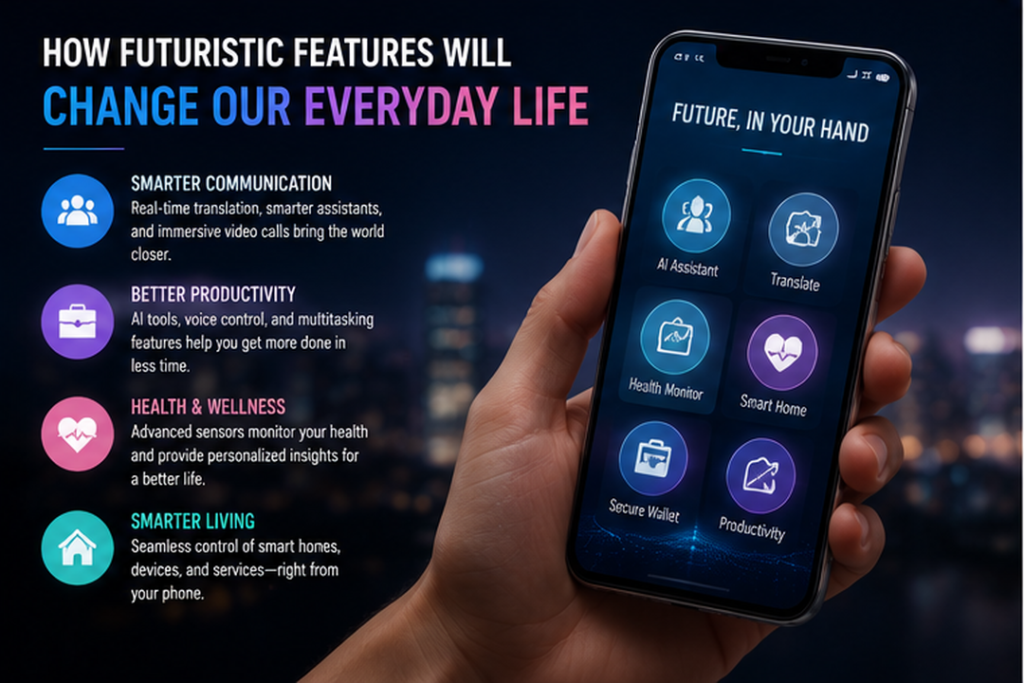
The key difference will be that future smartphones will not simply provide more features. They will become smarter tools designed to understand and assist users.
The Future of Smartphone Innovation
The next generation of smartphones will be shaped by a combination of technologies working together.
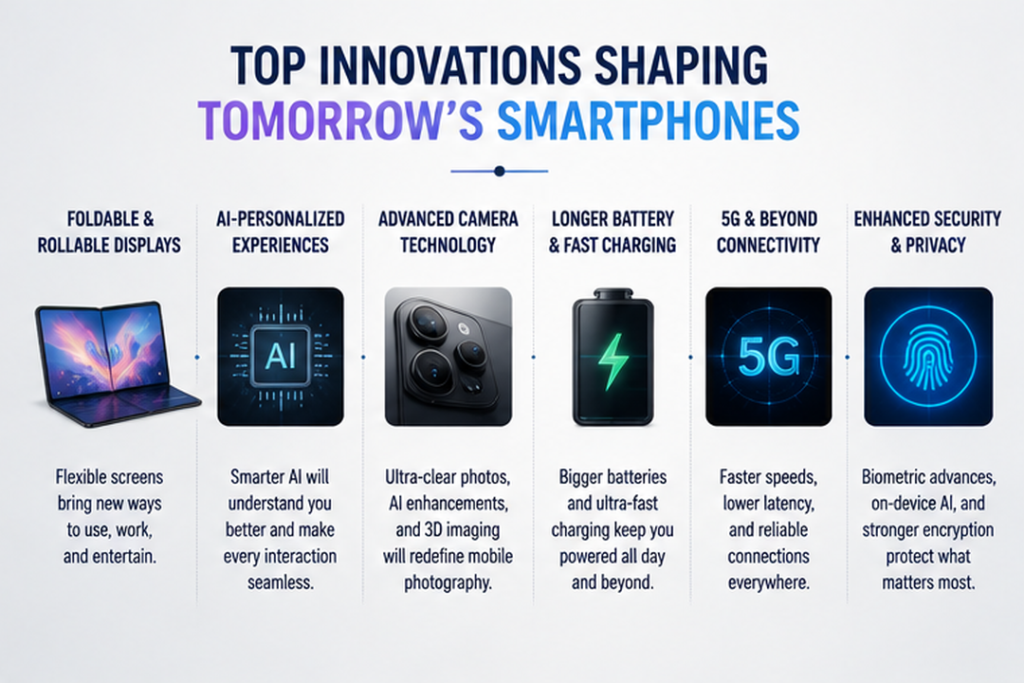
Artificial intelligence will make devices smarter. Advanced displays will change physical designs. Better batteries will improve usability. Stronger security will protect users. Faster connectivity will expand possibilities.
The smartphone of the future may not look completely different from today’s devices, but its capabilities will be significantly more advanced.
It will likely become a central connection point between people, digital services, smart devices, and intelligent systems.
Conclusion
The future of smartphones will be defined by innovation, intelligence, and connectivity.
From artificial intelligence and flexible displays to advanced security, improved batteries, health features, and sustainable designs, smartphones are continuing to evolve beyond simple communication tools.
As technology advances, smartphones will become more personalized, efficient, and deeply connected with everyday life.
However, successful innovation will require more than powerful hardware. Future smartphones must also prioritize privacy, security, affordability, and responsible technology development.
The next era of smartphones will not only change how people use devices. It will transform how people interact with the digital world itself.