
Introduction
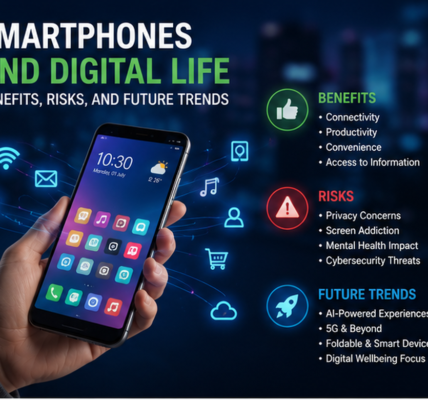
Smartphones have become an essential part of modern life, helping people communicate, work, study, shop, and enjoy entertainment from almost anywhere. Over the years, these devices have evolved from simple communication tools into powerful pocket-sized computers. Today’s smartphones offer advanced cameras, high-speed internet, intelligent assistants, and features that make everyday tasks faster and more convenient.
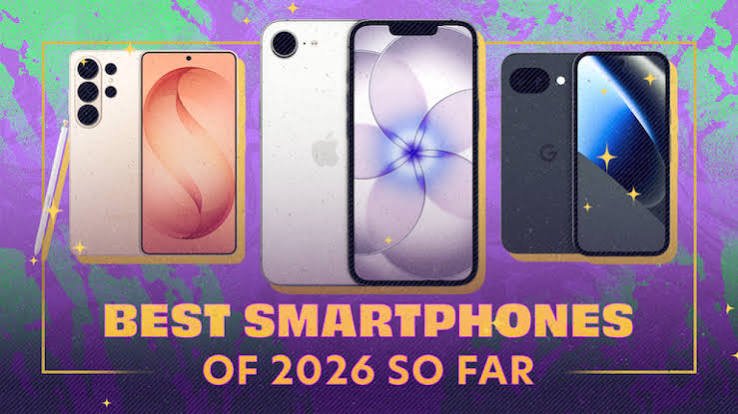
The smartphone industry continues to evolve as manufacturers introduce new devices, improve existing models, and compete to deliver better performance. Companies such as Apple, Samsung, Google, Xiaomi, and OnePlus are investing in artificial intelligence, camera technology, battery efficiency, and display innovation to attract consumers.
One of the biggest changes in the industry is the growing integration of AI into everyday smartphone features. Modern devices increasingly use intelligent software to improve photographs, translate conversations, summarize information, and personalize the user experience. At the same time, consumers continue to look for longer battery life, faster charging, durable designs, and reliable software updates.
Smartphone buyers also have more choices than ever before. Premium flagship models offer advanced features, while midrange and budget devices provide capable performance at more affordable prices.
Understanding the latest smartphone trends can help consumers make informed decisions and recognize which innovations are genuinely useful. From new releases and camera upgrades to battery improvements and software changes, the smartphone market continues to shape how people interact with technology.
1. Smartphone Manufacturers Are Competing Through Innovation
Competition among smartphone manufacturers remains an important driver of technological progress. Major brands regularly introduce new devices with improvements in processing power, camera performance, display quality, and software features.
Apple continues to focus on the integration of hardware, software, and its wider device ecosystem. Samsung offers a broad range of smartphones, including premium Galaxy S models, foldable devices, and more affordable Galaxy A phones. Google emphasizes its Pixel software experience, computational photography, and AI features.
Other manufacturers, including Xiaomi and OnePlus, compete by offering powerful hardware, fast charging, and different combinations of features and prices.
Rather than focusing only on specifications, manufacturers increasingly emphasize the overall user experience. This includes how smoothly applications run, how long a battery lasts, how reliably a camera performs, and how long a device receives software support.
Consumers are also paying more attention to durability and long-term value. A smartphone that remains secure and performs well for several years may be a better investment than a device with impressive specifications but limited support.
As competition continues, buyers can expect manufacturers to refine existing technologies while exploring new ways to make their products stand out.
2. Artificial Intelligence Is Becoming a Major Smartphone Feature
Artificial intelligence is one of the most important trends influencing modern smartphones. Manufacturers are integrating AI into software features that help users perform everyday tasks more efficiently.
Depending on the device, AI features may include photo editing, voice assistance, live translation, message summaries, writing suggestions, and improved search capabilities. Some smartphones can also help users organize information or interact with selected applications through natural language.
For example, AI-powered photo editing may allow users to remove unwanted objects from an image or adjust its appearance. Translation tools can help people communicate across language barriers, while intelligent writing features may assist with drafting messages.
On-device AI is also attracting attention. Some smartphones use dedicated processors to perform selected AI tasks directly on the device rather than sending every request to a remote server.
This can improve response times and may reduce the need to transfer certain information externally. However, the actual privacy benefits depend on how each feature is designed.
Not every smartphone supports the same AI capabilities. Some features require newer hardware, an internet connection, a particular language, or a subscription.
Consumers should therefore examine the features available on a specific model instead of assuming that every device marketed as an AI phone offers identical capabilities.
3. Camera Technology Continues to Improve
Smartphone cameras remain one of the most important factors influencing purchasing decisions. Many people now use their phones as their primary cameras for family photographs, travel pictures, social media posts, and video recording.
Manufacturers continue to improve camera sensors, image processing, optical stabilization, and zoom capabilities. These improvements can help users capture clearer images in challenging lighting conditions and record smoother video.
Computational photography is particularly important. Instead of relying only on the physical camera hardware, smartphones use software to combine information, reduce image noise, balance exposure, and improve colors.
Some devices also offer advanced portrait effects, night photography, and AI-assisted editing. High-end models may include dedicated telephoto cameras for photographing distant subjects, while other phones rely on digital cropping or computational techniques.
Video recording is another area of competition. Features such as improved stabilization, high-resolution recording, and enhanced audio capture can make smartphones more useful for content creators.
However, more megapixels do not automatically mean better photographs. Sensor size, lens quality, image processing, and software optimization all influence the final result.
Before buying a smartphone, consumers should consider the types of photographs they take most often. Someone who frequently photographs children or moving subjects may prioritize autofocus and shutter speed, while a travel enthusiast may value optical zoom and low-light performance.
4. Foldable Smartphones Are Expanding the Market
Foldable smartphones offer an alternative to traditional phone designs by using flexible displays that allow the device to open or close.
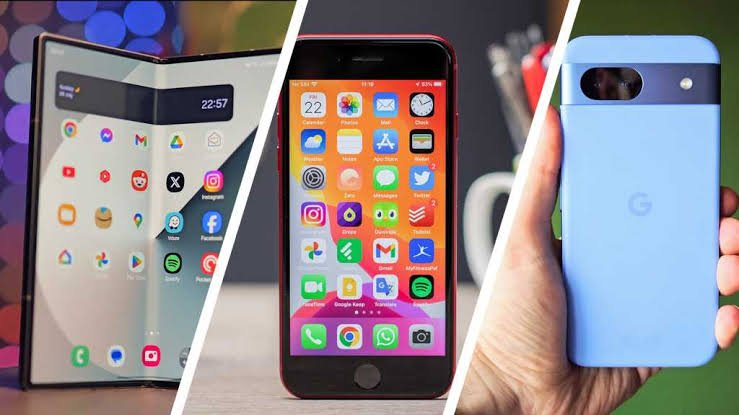
There are two broad categories. Flip-style devices fold vertically to become more compact, while book-style models open to provide a larger screen suitable for multitasking, reading, and viewing documents.
A larger internal display can make it easier to use multiple applications at once. Users may read an article while taking notes, review documents, or watch videos on a more spacious screen.
Foldable devices also present engineering challenges. Manufacturers must design hinges, flexible displays, and protective materials that can withstand repeated use. Thickness, weight, repair costs, and battery capacity can also affect the experience.
Prices have historically been higher than those of many conventional smartphones, although costs and available models vary across manufacturers and markets.
Software optimization is equally important. Applications need to adapt smoothly when users open or close the device, and the larger screen should provide practical benefits rather than simply extra space.
Foldables are an interesting example of how smartphone design is evolving. Their long-term popularity will depend on durability, affordability, and whether consumers find the flexible form factor genuinely useful.
5. Battery Life and Fast Charging Remain Top Priorities
Battery performance is one of the most important considerations for smartphone users. A powerful device is less convenient if it needs frequent charging throughout the day.
Manufacturers are working to improve battery capacity, processor efficiency, display power consumption, and software management. These improvements can help smartphones last longer between charges.
Fast charging is another important feature. Supported devices can recharge a substantial portion of their batteries in a relatively short period, reducing the time users spend connected to a charger.
However, charging speeds differ significantly between models. The advertised maximum may require a compatible charger and cable, and charging performance can decrease as the battery fills or the device becomes warm.
Wireless charging is also available on many premium smartphones and selected midrange models. It offers convenience, although charging speeds and efficiency vary.
Battery health matters over the long term as well. Heat and repeated charging cycles gradually affect rechargeable batteries, so manufacturers increasingly provide battery-management settings and charging limits on some devices.
When comparing smartphones, consumers should consider real-world battery endurance rather than capacity alone. A device with efficient software and hardware may last longer than a phone with a larger battery but higher power consumption.
6. Smartphone Displays Are Becoming More Advanced
Display technology continues to improve, giving users brighter screens, smoother scrolling, and more immersive viewing experiences.
Many modern smartphones use OLED or AMOLED displays, which can provide deep blacks, strong contrast, and vibrant colors. Premium models may also offer high refresh rates, making animations and scrolling appear smoother.
Brightness is another important factor. A bright display can improve visibility outdoors, although actual performance depends on screen settings, temperature, and lighting conditions.
Manufacturers are also refining display durability and reducing the size of bezels around the screen. These changes allow devices to offer large viewing areas without becoming significantly larger.
For people who frequently watch videos, play games, or read on their phones, display quality can make a noticeable difference.
However, the most expensive screen is not always necessary. Many midrange smartphones already offer sharp displays and smooth performance suitable for everyday use.
Consumers should compare screen resolution, brightness, refresh rate, color quality, and size according to their needs. A good display is one that remains comfortable to use during daily activities rather than simply having the highest specification.
7. Software Updates Are Becoming More Important
Smartphone software affects security, performance, battery management, and the availability of new features. As devices become more central to everyday life, software support has become an increasingly important purchasing consideration.
Apple distributes iOS updates to supported iPhones, while Android manufacturers provide updates according to their individual support policies. Samsung and Google have announced extended software-support commitments for selected newer devices, although the exact terms depend on the model and release.
Regular updates can fix security vulnerabilities, improve stability, and introduce new features. They may also help devices remain useful for longer.
However, update policies differ. Some smartphones receive several years of operating-system and security updates, while others have shorter support periods.
Consumers should check the manufacturer’s official policy before buying a phone, especially if they intend to keep it for four or five years.
Software experience also varies between brands. Some interfaces offer extensive customization, while others focus on a simpler design or close integration with a wider ecosystem of devices.
A smartphone with reliable long-term support may provide better value than one with slightly better hardware but a shorter update period.
8. 5G Connectivity and the Future of Mobile Networks
Mobile connectivity has changed significantly with the expansion of 5G networks. Compared with older network technologies, 5G can provide higher speeds and lower latency under suitable conditions.
These capabilities can improve activities such as downloading large files, streaming high-quality video, participating in online meetings, and playing cloud-based games.
However, the experience depends on network coverage, signal strength, congestion, carrier support, and the particular frequency bands used in a region.
A phone advertised as supporting 5G may not perform identically on every network. Buyers should check compatibility with their preferred carrier before purchasing an imported device.
The availability of 5G also does not mean that 4G smartphones immediately become unusable. In many areas, 4G remains an important part of mobile connectivity and can still provide a satisfactory experience for everyday tasks.
As mobile networks evolve, smartphone manufacturers will continue working to improve modem efficiency, connection reliability, and network management.
For most users, the best approach is to choose a device that supports the networks available in their area and provides reliable performance for their typical activities.
9. Budget Smartphones Are Becoming More Capable
Affordable smartphones have improved considerably over the years. Many budget and midrange devices now offer large displays, capable cameras, reliable processors, and batteries that can last through a typical day.
This means consumers no longer need to buy the most expensive flagship phone to handle common activities such as messaging, video streaming, navigation, online shopping, and social media.
Midrange devices may also include features that were once limited to premium models, such as high-refresh-rate displays, fast charging, and improved camera processing.
However, differences remain. Budget smartphones may use less powerful processors, have more limited cameras, or receive fewer years of software support.
Some manufacturers also make compromises in areas such as water resistance, wireless charging, or display brightness.
The best way to compare affordable devices is to focus on everyday performance rather than marketing claims. Battery life, software support, storage capacity, camera reliability, and network compatibility are often more important than a long list of specifications.
For students, families, and users who simply need a dependable phone, a well-chosen budget device can provide excellent value.
10. Smartphone Security and Privacy Are Essential
Smartphones contain large amounts of personal information, including messages, photographs, location data, payment details, and account credentials. Protecting this information is increasingly important.
Manufacturers use several security measures, including fingerprint recognition, facial authentication, device encryption, and software updates. Many phones also allow users to control which applications can access their camera, microphone, contacts, and location.
AI-powered features introduce additional privacy considerations. Some functions process information locally, while others rely on remote servers. Users should understand how a particular feature works before sharing sensitive material.
Cybercriminals may also target smartphone users through fraudulent messages, malicious applications, fake websites, and social-engineering attacks.
Basic security practices can significantly reduce risks. Users should install updates, download applications from trusted sources, use strong authentication, and avoid clicking suspicious links.
It is also wise to enable device-finding and backup features so that information can be recovered if a phone is lost or damaged.
Privacy and security should not be treated as optional extras. A smartphone should protect its owner’s information while providing the convenience of modern digital services.
11. Sustainability and Smartphone Repairability
Environmental concerns are becoming more prominent in the smartphone industry. Manufacturing electronic devices requires energy and raw materials, while discarded phones contribute to electronic waste.
One way to reduce this impact is to keep smartphones for longer. Replacing a battery, repairing a damaged screen, or maintaining software support may extend a device’s useful life.
Some manufacturers are improving repair access, offering replacement parts, or designing selected components to be easier to service. However, repairability varies considerably between models.
Recycling is another important consideration. Old smartphones may contain materials that can be recovered, but they should be handled through appropriate recycling programs rather than disposed of carelessly.
Software support also influences sustainability. A phone that remains secure and functional for many years is less likely to require early replacement.
Consumers can contribute by choosing durable devices, using protective cases when appropriate, repairing phones when practical, and recycling unwanted electronics responsibly.
As environmental awareness grows, durability and repairability may become more important factors in smartphone purchasing decisions.
12. What to Look for When Buying a New Smartphone
With so many models available, choosing the right smartphone can feel confusing. The best device depends on a person’s budget, priorities, and daily habits.
Before making a purchase, consider the following factors:
- Performance: Choose a processor and memory configuration suitable for your applications, gaming, and multitasking needs.
- Camera quality: Compare real-world photographs, low-light performance, video recording, and optical zoom where relevant.
- Battery life: Look for dependable everyday endurance and charging options that fit your routine.
- Display: Consider screen brightness, resolution, refresh rate, and size.
- Software support: Check how long the manufacturer promises operating-system and security updates.
- Storage: Make sure there is enough room for photographs, videos, applications, and downloaded files.
- Connectivity: Confirm that the device supports your carrier’s network bands and other required connections.
- Price and durability: Compare the overall value, repair costs, warranty, and expected lifespan.
It is also worth considering whether you already use products from a particular ecosystem. Compatibility with a laptop, smartwatch, tablet, or other devices may make everyday tasks more convenient.
Most importantly, avoid paying for features you are unlikely to use. A balanced smartphone that meets your actual needs can be a better investment than a more expensive model with unnecessary extras.
Conclusion
The smartphone industry continues to evolve through improvements in artificial intelligence, camera technology, displays, battery efficiency, connectivity, and software support. Manufacturers are also experimenting with foldable designs and developing more capable devices across different price categories.
These changes are making smartphones more versatile, allowing people to communicate, work, create content, and access information from almost anywhere. At the same time, security, privacy, sustainability, and long-term software support are becoming increasingly important.
For consumers, the latest smartphone is not necessarily the best choice. A good purchasing decision depends on finding the right balance between performance, price, reliability, and practical features.
Before buying a new device, compare specifications, review official support policies, and consider how the phone will fit into your daily life. It is also worth remembering that many recent smartphones remain capable of handling everyday tasks without needing an immediate upgrade.
As technology advances, smartphones will likely become more intelligent, efficient, and closely integrated with other digital services. The most valuable innovations will be those that improve the user experience while protecting personal information and providing lasting value.
Ultimately, the future of smartphones will be shaped not only by powerful hardware and impressive new features but also by how effectively these devices meet the real needs of the people who use them.