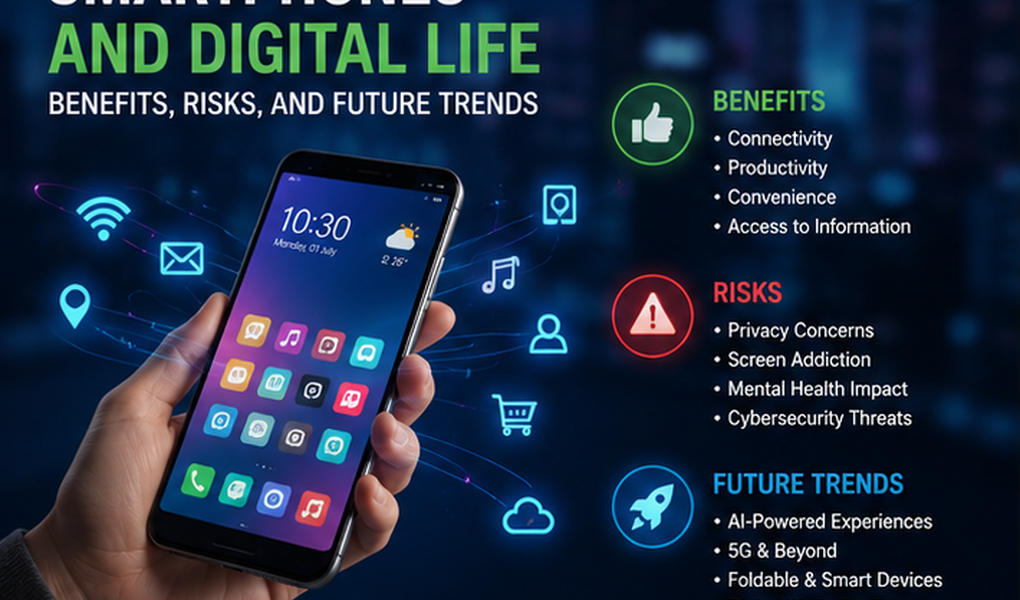
Smartphones and Digital Life: Benefits, Risks, and Future Trends

Smartphones have become one of the most influential technologies in modern society. What started primarily as a portable device for making calls has developed into a powerful digital tool for communication, education, entertainment, banking, shopping, healthcare access, navigation, and professional work. For millions of people, a smartphone is now the main gateway to the digital world.
The relationship between smartphones and digital life continues to grow as mobile technology becomes faster, smarter, and more deeply connected with everyday activities. People can attend online meetings, transfer money, learn new skills, manage businesses, communicate internationally, and access important information from almost anywhere.
However, greater convenience also creates challenges. Excessive screen time, privacy concerns, cybersecurity threats, misinformation, digital distraction, and electronic waste are becoming increasingly important issues.
Understanding the benefits and risks of smartphones—and the technologies likely to shape their future—can help individuals use these devices more responsibly while benefiting from the opportunities of an increasingly connected world.
How Smartphones Have Changed Digital Life
Early mobile phones were designed mainly for calls and text messages. Today’s smartphones combine many technologies that previously required separate devices.
A modern smartphone can function as a camera, GPS navigator, music player, digital wallet, gaming device, video player, document scanner, communication platform, and portable computer.
This transformation has changed people’s expectations of technology. Information that once required visiting a library or using a desktop computer can now be accessed within seconds.
Mobile apps have also created digital ecosystems for almost every aspect of daily life. Banking, transportation, food delivery, education, entertainment, productivity, and healthcare services increasingly provide mobile-first experiences.
As a result, smartphones are no longer simply communication devices. They have become central components of modern digital lifestyles.
Major Benefits of Smartphones in Everyday Life
Smartphones provide numerous advantages when used effectively. Their greatest strength is the ability to combine communication, information, productivity, and entertainment in one portable device.
Faster and Easier Communication
Communication remains one of the most important smartphone benefits.
People can make voice calls, participate in video meetings, send instant messages, exchange documents, and communicate through social platforms regardless of geographical distance.
Families living in different countries can maintain regular contact through video calls. Businesses can communicate with employees and customers instantly. Students can collaborate with classmates without being physically present in the same location.
This instant connectivity has made personal and professional communication faster and more convenient.
Smartphones and Access to Information
Smartphones provide immediate access to an enormous amount of information.
Search engines, educational websites, news platforms, digital libraries, podcasts, online courses, and video tutorials can all be accessed through mobile devices.
A student can research an academic topic while traveling. A professional can read industry updates before a meeting. A traveler can quickly find transportation information or directions in an unfamiliar city.
This accessibility has made knowledge easier to obtain, although users must still evaluate the reliability of the information they encounter online.
Education and Mobile Learning
Smartphones have significantly expanded opportunities for digital education.
Educational apps, recorded lectures, language-learning platforms, digital textbooks, quizzes, and virtual classrooms allow learners to study beyond traditional classroom environments.
Flexible Learning Opportunities
One major advantage of mobile learning is flexibility.
Students can review lessons while commuting, watch tutorials at home, practice vocabulary during short breaks, or communicate with instructors through educational platforms.
Smartphones can be especially valuable in areas where access to traditional educational resources is limited.
However, smartphones are most effective as educational tools when learners manage distractions and use reliable sources.
Smartphones in Business and Professional Life
Mobile technology has changed the way businesses operate.
Professionals can read and respond to emails, join video conferences, review documents, manage schedules, monitor projects, communicate with customers, and access cloud-based services directly from their smartphones.
Entrepreneurs can also use mobile devices to manage online stores, advertise products, communicate with customers, receive digital payments, and track business performance.
Supporting Remote Work
The growth of remote and hybrid work has made mobile connectivity increasingly important.
Although smartphones cannot completely replace computers for every professional task, they allow employees to remain connected when away from their desks.
Mobile productivity apps can support collaboration, communication, scheduling, and basic document management.
For small businesses and independent professionals, this flexibility can improve efficiency while reducing dependence on traditional office environments.
Digital Banking and Mobile Payments
Financial technology is another area transformed by smartphones.
Mobile banking applications allow users to check account balances, transfer funds, pay bills, receive transaction notifications, and manage various financial services without visiting a physical branch.
Digital wallets and contactless payment systems have made everyday transactions faster and more convenient in markets where these technologies are supported.
For businesses, mobile payments can also make it easier to accept customer payments.
However, financial convenience makes smartphone security particularly important. A compromised device may expose sensitive financial information if appropriate security protections are not enabled.
Entertainment in the Smartphone Era
Smartphones have transformed the entertainment industry.
People can stream movies, watch short videos, listen to music, play games, read digital books, follow sports, and interact with creators from a single device.
Entertainment has become highly personalized because digital platforms can recommend content based on viewing habits and interests.
This convenience has created enormous opportunities for content creators and media businesses.
At the same time, unlimited access to entertainment can encourage excessive screen time. Responsible usage therefore remains important.
Smartphones and Social Connection
Social media and messaging applications have made it easier to maintain relationships across long distances.
People can share photographs, celebrate important moments, participate in communities, and communicate with friends or relatives almost instantly.
Online communities can also connect people with shared professional, educational, or personal interests.
However, digital connection is not always a replacement for meaningful face-to-face interaction. Healthy digital habits require balance between online communication and offline relationships.
Navigation and Travel
Smartphones have made traveling significantly easier.
GPS applications can provide directions, estimated travel times, traffic information, nearby business locations, and public transportation guidance.
Travelers can also use smartphones for hotel bookings, airline information, translation, currency information, digital tickets, and destination research.
These features have reduced the need to carry separate maps, guidebooks, cameras, and travel documents in many situations.
Health and Fitness Applications
Smartphones increasingly support personal wellness and fitness management.
Mobile applications can help users track physical activity, workouts, sleep patterns, nutrition, hydration, and other lifestyle information.
Smartphones can also connect with wearable devices such as smartwatches and fitness trackers.
Telehealth services in some regions allow patients to communicate with healthcare professionals remotely, making certain types of healthcare more accessible.
However, health apps should not automatically be treated as substitutes for professional medical advice. Users should also consider how sensitive health information is collected and protected.
Risks of Smartphones and Digital Life
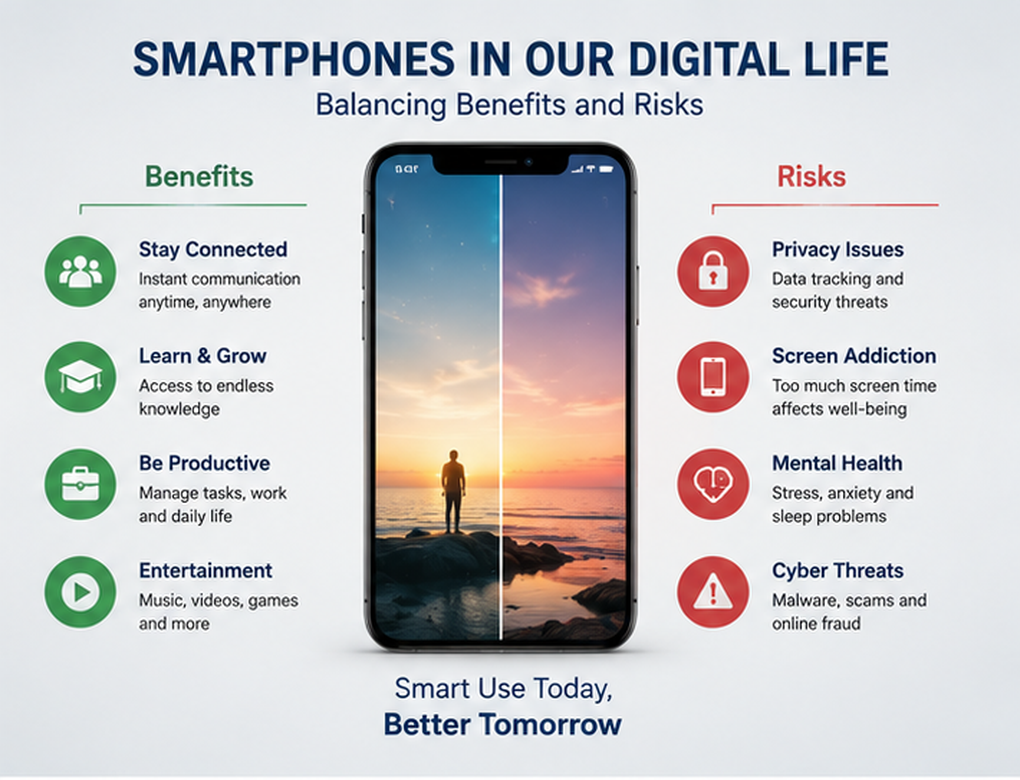
Despite their benefits, smartphones can create significant problems when they are used excessively or without adequate security awareness.
Understanding these risks is essential for responsible digital participation.
Excessive Screen Time
One of the most widely discussed concerns is excessive smartphone use.
People may spend hours scrolling through social media, watching videos, gaming, or repeatedly checking notifications.
Long periods of screen use can interfere with sleep, productivity, exercise, study, and face-to-face communication.
The issue is not simply how many hours someone uses a smartphone. The purpose and timing of that usage also matter.
Using a phone for work or education is different from spending hours automatically scrolling through content without a clear purpose.
Building Healthier Digital Habits
Users can develop healthier smartphone habits by setting screen-time limits, disabling unnecessary notifications, keeping devices away during important conversations, and avoiding excessive use before bedtime.
Creating specific periods without digital devices can also help people focus on other activities.
The goal does not need to be eliminating smartphone use. Instead, users can develop a healthier relationship with technology.
Privacy Concerns
Smartphones can contain large amounts of personal information.
Photos, contacts, emails, browsing activity, location information, financial applications, personal messages, and login credentials may all be stored or accessible through a device.
Apps can also request access to features such as location, cameras, microphones, contacts, and files.
Users should review these permissions carefully and provide access only when it is necessary for an application’s legitimate function.
Privacy awareness is becoming increasingly important as digital services collect larger amounts of user data.
Cybersecurity Threats on Smartphones
Smartphones are attractive targets for cybercriminals because they can provide access to valuable personal and financial information.
Common threats include phishing messages, malicious applications, fraudulent links, account theft, unsafe public networks, and social engineering scams.
How to Improve Smartphone Security
Several basic security practices can significantly reduce digital risk:
- Keep the operating system and applications updated.
- Use a strong PIN, password, fingerprint, or other secure screen lock.
- Enable multi-factor authentication for important accounts.
- Download apps from trusted sources.
- Avoid opening suspicious links or attachments.
- Review application permissions regularly.
- Back up important data.
- Be cautious when using unsecured public Wi-Fi networks.
No security measure can remove every risk, but combining several protections can make unauthorized access considerably more difficult.
Social Media, Misinformation, and Digital Pressure
Smartphones provide immediate access to social networks, but this convenience can also accelerate the spread of misinformation.
False stories, manipulated images, misleading headlines, and content presented without context can reach large audiences quickly.
Users should therefore verify important claims before sharing them.
Digital platforms can also create social pressure. Constant exposure to carefully selected images of other people’s lives may create unrealistic expectations about success, appearance, wealth, or lifestyle.
Developing digital literacy is increasingly important for navigating these environments responsibly.
Smartphone Distraction and Productivity
Notifications can interrupt concentration throughout the day.
A message, social media alert, email, or application notification may seem insignificant, but repeated interruptions can make focused work more difficult.
This is especially important for students and professionals who need extended periods of concentration.
Using focus modes, disabling non-essential alerts, and establishing specific times for checking messages can help reduce unnecessary interruptions.
Smartphones should ideally support productivity rather than constantly compete for attention.
Smartphones and Children
Children are growing up in an environment where digital technology is present from an early age.
Smartphones can provide educational content, communication tools, and creative opportunities. However, unrestricted access can expose younger users to inappropriate content, excessive screen time, online scams, privacy risks, and harmful interactions.
Parents and guardians can help by establishing age-appropriate rules, discussing online safety, using suitable parental controls, and encouraging offline activities.
Teaching responsible technology use may be more sustainable than relying only on restrictions.
Environmental Impact of Smartphones
The environmental impact of smartphones is another important consideration.
Manufacturing electronic devices requires raw materials, energy, transportation, and complex global supply chains. Frequently replacing devices also contributes to electronic waste.
Consumers can reduce this impact by keeping smartphones longer, repairing devices when practical, recycling old electronics through appropriate programs, and considering durability when purchasing new technology.
Manufacturers also have an important role in improving repairability, energy efficiency, recycling programs, and responsible sourcing.
The Future of Smartphones and Digital Life
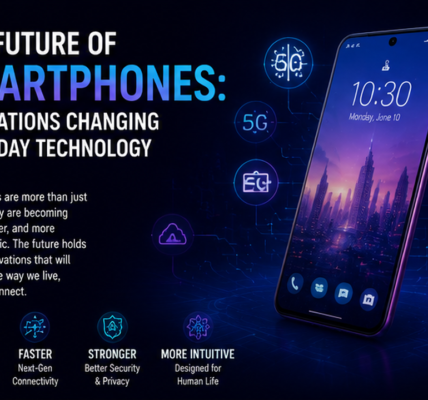
Smartphones will continue evolving as artificial intelligence, connectivity, computing power, and digital services advance.
Future smartphones may become more personalized, intelligent, energy-efficient, and closely connected with other devices.
Artificial Intelligence in Smartphones
Artificial intelligence is already becoming a major part of mobile technology.
AI can support photography, translation, voice recognition, predictive text, search, accessibility features, spam detection, and personalized recommendations.
Future devices are likely to perform more AI processing directly on the phone.
This could make certain features faster and may provide privacy benefits when sensitive information can be processed locally rather than constantly being sent to remote servers.
Smarter Digital Assistants
Digital assistants are expected to become more capable.
Instead of responding only to simple commands, future AI assistants may help users summarize information, organize schedules, edit documents, translate conversations, manage communications, and automate routine tasks.
This development could make smartphones more proactive and personalized.
However, it will also raise important questions about privacy, data access, accuracy, and user control.
Faster Mobile Connectivity
Continued improvements in mobile networks can make smartphones more capable.
Faster connectivity and lower latency can support high-quality video communication, cloud applications, gaming, augmented reality, smart devices, and advanced business services.
Over time, research into technologies beyond today’s widely deployed networks may further expand what mobile devices can accomplish.
Improved connectivity could be particularly valuable for remote education, digital businesses, and services in areas with limited fixed broadband infrastructure.
Foldable and Flexible Smartphones
Smartphone design is also changing.
Foldable devices already combine elements of phones and tablets. Future developments may make flexible displays thinner, more durable, and more affordable.
These designs could provide larger working areas without significantly increasing the size of devices when carried.
Whether foldable devices become mainstream will depend on factors such as durability, price, software optimization, and practical consumer demand.
Augmented Reality and Connected Experiences
Augmented reality, or AR, adds digital information to a user’s view of the physical world.
Smartphones can already support AR applications for gaming, shopping, navigation, education, and interior design.
Future devices may integrate AR more deeply with cameras, artificial intelligence, and wearable technology.
For example, users could receive real-time navigation guidance, translate signs through a camera, preview furniture inside a room, or access interactive educational information about physical objects.
Smartphones and the Internet of Things
Smartphones are increasingly becoming control centers for connected devices.
Users can manage smart lights, security cameras, televisions, appliances, vehicles, and wearable technology through mobile applications.
As the Internet of Things expands, smartphones may become even more important for managing connected environments.
Security will remain essential because connecting more devices can also create additional opportunities for cyberattacks.
Will Smartphones Eventually Disappear?
It is possible that smartphones will eventually become less dominant as new forms of technology develop.
Smart glasses, wearable displays, voice interfaces, mixed-reality devices, and AI-powered assistants could gradually reduce the need to constantly look at a traditional smartphone screen.
However, smartphones are unlikely to disappear suddenly.
They remain highly practical because they combine powerful computing, connectivity, cameras, displays, and portability in one relatively compact device.
The more likely future is that smartphones will evolve and work alongside new categories of technology.
Creating a Healthier Digital Future
The future of smartphones should not be measured only by faster processors or more advanced cameras.
Technology should also become safer, more accessible, more sustainable, and easier to control.
Consumers can contribute by developing responsible digital habits and protecting their personal information. Technology companies can improve privacy, security, accessibility, and device longevity. Governments and regulators can establish appropriate protections while allowing useful innovation to continue.
The challenge is not choosing between technology and a healthy lifestyle. It is learning how to make technology serve human needs rather than allowing constant connectivity to control everyday life.
Conclusion
Smartphones and digital life are now deeply connected. Smartphones have transformed communication, education, business, entertainment, banking, travel, and access to information. They provide extraordinary convenience and have created opportunities that were difficult to imagine only a few decades ago.
At the same time, their benefits come with real responsibilities. Excessive screen time, privacy concerns, cybersecurity threats, misinformation, distraction, and electronic waste require greater awareness from both users and technology companies.
The next generation of smartphones will likely be shaped by artificial intelligence, faster connectivity, augmented reality, flexible displays, and smarter connected devices.
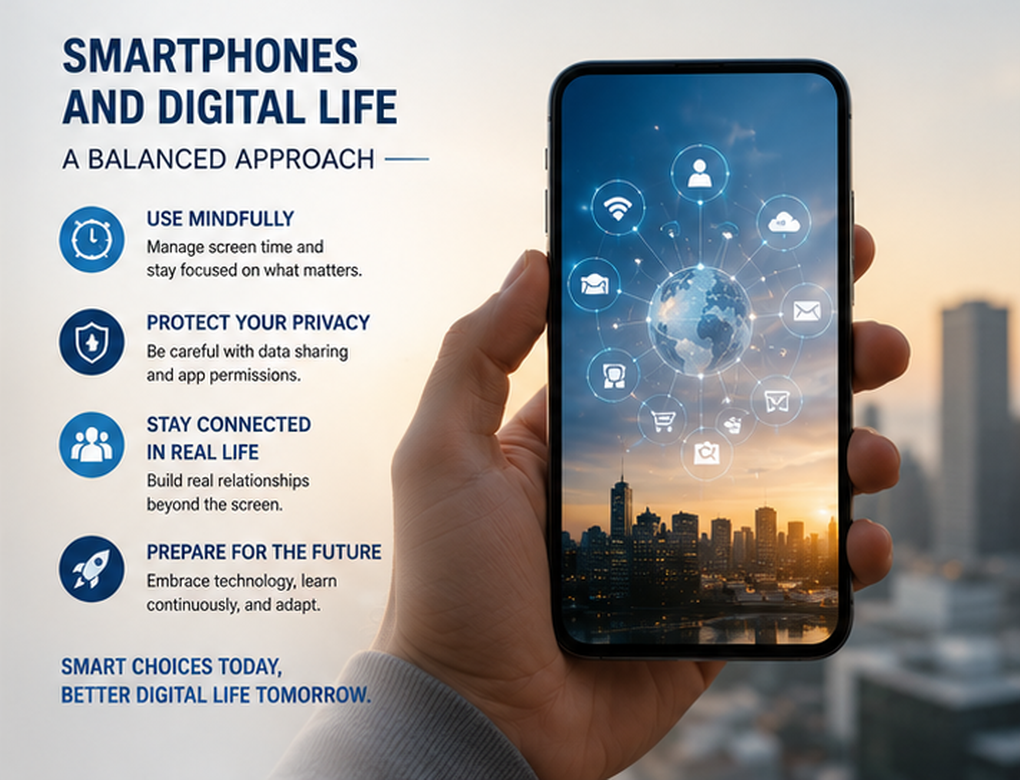
Ultimately, the most important question is not how powerful smartphones become, but how effectively people use them. When technology is used securely, intentionally, and responsibly, smartphones can remain valuable tools for creating a more connected, productive, and informed digital future.